
- 作者:北平
- 来源:???ڇ?;
- 发布时间:2026-08-26
英雄少年
What the West's assimilation accusations against China reveal about its own historical burdens_我的网站

一 | (ECNS)-- China's newly implemented Ethnic Unity and Progress Promotion Law has elicited a predictable response from certain Western media outlets. Whenever ethnic unity is referenced, some Western critics rush to frame it as "assimilation" or a push for uniform national identity. Fan Yichou, associate professor at the Law School of Minzu University of China, argues that such misinterpretations arise primarily from projecting Western historical nation-state building trajectories onto China's ethnic policies. Put simply, some Western observers do not view China from the perspective of its domestic social realities, but rather judge it through the lens of their own historical experience. Fan argued that the traditional Western nation-state model rests on a core premise: one ethnic community ought to align with one sovereign state, with political boundaries largely overlapping ethnic territories. To build culturally homogeneous nation-states, most Western powers historically sought to eradicate internal ethnic diversity through assimilation, exclusion, and other coercive measures. Such nation-building drives were often accompanied by territorial conquest, mass population displacement, and systemic violence. He drew on arguments laid out by Canadian political philosopher Will Kymlicka, who observes that the classical European template of nation-building rested on an implicit consensus: states should strive to become culturally homogeneous, by either assimilating national minorities or expelling them. For centuries, this ideal of a mono-national state shaped state policy across almost all Western European countries, with Switzerland stands out as the only major exception. This deep-rooted historical trajectory continues to frame contemporary discourse on ethnic governance. A stark modern illustration emerged in 2025, when Danish local authorities took away the newly-born daughter of an 18-year-old Inuit mother from Greenland just one hour after birth following a controversial parenting competency assessment. Her case was far from isolated. According to reports by the BBC and other media outlets, another Greenlandic mother had all three of her children under state custody. She was first subjected to a so-called parenting competency test after social services raised concerns about the language development of her eldest daughter. Although the Danish government has decided to stop using such tests on Greenlandic families, local authorities have yet to halt the practice. The enduring harm of assimilationist policies extends far beyond this Danish case. UNESCO’s Memory of the World archives document that Canada's Indigenous residential school system continuously operated for nearly 150 years, with the explicit state objective of assimilating Indigenous children into settler society. Generations of Indigenous children were forcibly separated from their families, severed from their ancestral languages, cultural traditions, and intergenerational knowledge systems. The United States has grappled with comparable challenges. According to a 2025 Associated Press report, Native American children in California are roughly about four times more likely to enter the foster-care system than their peers. Newborns separated from their mother shortly after birth. Generations of children torn apart from their families and ancestral languages. Indigenous youth who remain vastly overrepresented in foster-care placements to this day. All these are legacies of the West's long-standing obsession with assimilation. That explains why, when some in the West hear China speak of "ethnic unity," they instinctively equate it with "assimilation." In reality, they are projecting their own social trauma onto China. China's context, however, is fundamentally different. As Fan Yichou notes, China has long been a unified multi-ethnic country. Within the Chinese tradition, political unity has not demanded cultural uniformity. Instead, unity and diversity have coexisted across most of the nation's history. This outlook finds theoretical expression in the concept of plurality-in-unity put forward by renowned Chinese sociologist Fei Xiaotong. In his framework, China's 56 ethnic groups represent the plurality, whereas the Chinese nation embodies unity. From this perspective, the Ethnic Unity and Progress Promotion Law is not designed to eliminate ethnic differences. Instead, it seeks to strengthen a shared sense of belonging while respecting cultural diversity. This distinction highlights a broader divergence between China and the West in approaching identity and social cohesion. In many Western societies, historical assimilation sought to diminish group differences and compel minority groups to conform to dominant-culture norms. By contrast, China's emphasis on forging a strong sense of community for the Chinese nation is not intended to obliterate diversity. It seeks to build shared civic and national identity, while enabling all ethnic groups to sustain their own languages, customs, and cultural traditions. Ethnic groups may speak different languages, practice different customs, and vary in development level. Yet they can still uphold shared dedication to national progress and a common sense of belonging within a unified multi-ethnic state. Genuine ethnic unity does not require everyone to fit into the same mold. It means ensuring that different ethnic groups can participate in national development while maintaining their own cultural characteristics and thriving with equal dignity and equitable opportunities. So when some in the West equate China's "ethnic unity" with "assimilation," their judgment stems not from an accurate assessment of China’s reality, but from a subconscious projection of their own historical burdens, contemporary social anxieties, and deep-rooted institutional scars onto China's ethnic policies. They are either unwilling or unable to fully comprehend China's governance philosophy and practices, yet arbitrarily pass arrogant judgment on the country. The outcome of this biased approach will be no exception of absurd narratives that fundamentally contradict objective reality. 
 。
。

二 | ”他纠正道。Vita正是这个梦的延续。

三 | Vita学术标准大致对标全球三大顶刊《细胞》《自然》《科学》(合称CNS)。它由高等教育出版社主办出版,进行完全自主化运营,是国内首个以顶刊建设为目标、使用自主传播平台的期刊。除主刊以外,多本子刊已在陆续创办中。今年1月,Vita主刊第一篇论文上线,截至目前已收到投稿400余篇,其中有22篇原创研究论文。

四 | 多位受访者指出,该刊论文质量已达到顶尖水平。国产学术期刊,终于开始自己“造船”了。

五 |
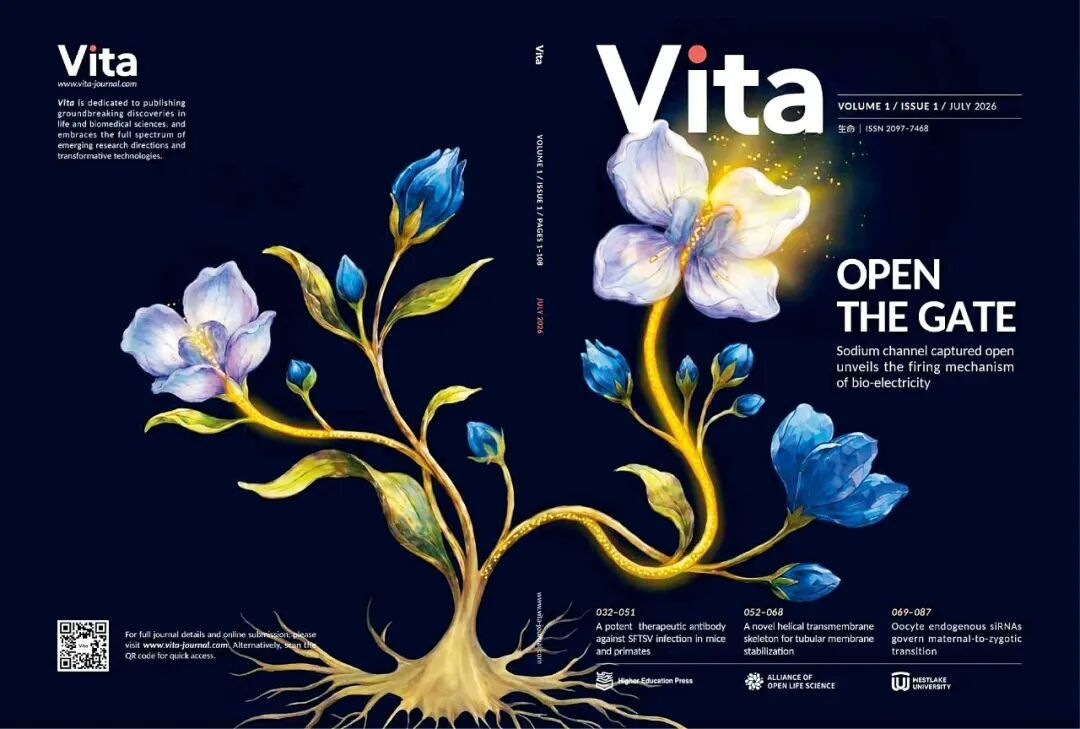
Vita首期纸质版封面
告别影响因子Vita一词源自拉丁语,意为“生命”,这也是期刊的中文名称。

六 | 去年8月,国内15所高校和科研机构共同发起成立“生命科学开放联盟”,Vita是联盟旗舰期刊。目前,联盟成员机构已扩至39所,超百位国内外顶尖科学家加入了学术顾问委员会。中国科学院院士、西湖大学校长施一公是Vita期刊共同主编。他向《中国新闻周刊》等多家媒体表示,国产学术期刊走向世界的时机已成熟。在他看来,虽然近些年来我国生命科学领域科学家在CNS等顶级期刊发文量持续上升,但国内顶尖的生命科学研究仍然相对缺乏。与此同时,国内绝大多数高质量生命科学研究成果流向了国外优秀期刊。

七 | 学界清晰地意识到,生命科学领域仍需一本有影响力的国产顶刊。Vita应运而生。

八 | 它的稿件包含范围非常广,从微生物到动植物,再到基础医学、疾病机理探讨和治疗。谈起选稿品味,李党生总结为“不追热点、只追创新”。近年来学界有一种声音逐渐清晰:好的成果一定都能发到CNS上吗?CNS上的成果一定就是最好的吗?这背后是对学术成果评价的思考。Vita的答案是,回归学术本身。

九 | “这个命题听上去有多简单,做起来就有多难。

十 | ”李党生说,Vita的另一重使命,便是尝试探索新的评价体系。长久以来,学术期刊水平的评价体系被简单地让渡到单一指标,也就是影响因子。

十一 | 李党生并不反对影响因子,称其作为文献计量学指标有一定合理性。但根据英国经济学家查尔斯·古德哈特提出的古德哈特定律,当一个可量化指标成为政策制定目标或依据时,它便不再是一个好的指标,因为人们会百般操纵或优化该指标。施一公更是直言,对某些国产期刊来说,影响因子可以被“造”出来。而期刊的真实水平,最终取决于其原创论文的水平。李党生对Vita的期望是,其一直保持“以文为本”的评价体系,用一篇篇论文慢慢构建声誉。每年6月,全球数据分析服务公司科睿唯安发布的《期刊引证报告》会给出期刊上一年的影响因子。Vita系列期刊若要告别影响因子,该用什么样的指标去与其他期刊对话?李党生解释,新生期刊通常有一个评估期,一般在其运行三年后,才开始学术水平的评估和认定。Vita系列期刊的计划是,从前三年发表的原创论文中随机抽样,分发给领域内同行专家审读,多位专家根据论文学术质量和学术严谨性打分,综合这些分数,作为期刊学术水平的一种认定。不过,具体操作方案还有待完善。目前,Vita原创论文阅读量已超30万次,每篇论文平均阅读量上万次。2006年,李党生从美国回国,担任《细胞研究》的常务副主编时,从接触论文作者开始,争取那些“比期刊现有水平高一点点”的文章,一步步积累口碑。这也是Vita正在做的。

十二 | Vita未来会把争取更多国外作者作为一个努力的方向。李党生解释,国内学术期刊品牌一打出来,自然首先受到中国科学家群体,乃至全球华人科学家群体的关注。之后,需在发展过程中逐渐扩展影响力。这一时间对Vita来说可能很长。李党生坦言,同水平的国外科学家有大量耳熟能详且备受推崇的期刊可以选择,目前优先考虑Vita的可能性很低。长久以来,国内学术期刊只能“借船出海”,即与国外出版社合作出版,通过国际出版平台的发行渠道和网上平台推介自己,提升国际影响力。要想实现品牌、运营完全自主自然需要“造船出海”。“不管你的货多好,船是人家的,听起来总归不太安全。”李党生说。
不收版面费Vita的审稿模式与主流顶级期刊没有什么不同,它注重稿件的前沿性、开拓性、突破性、颠覆性,经编辑部评测筛选、同行专家评审等流程,进而决定刊发与否。

十三 | 最大的不同点在于,Vita免费开放,不向论文作者收取出版费用。开放获取期刊(即面向读者免费的期刊)的版面费又称论文处理费,用于覆盖出版成本。以《自然》杂志的子刊《自然-通讯》为例,它的论文处理费已从2016年的每篇3000美元飙升至2026年的7350美元。中国是国际学术期刊的重要稿源地,2024年中国作者开放期刊发文量占全球的30%以上,支付论文处理费9.09亿美元。中国学者将科研成果投向国外期刊,发论文付高额出版费用,这使得国内科研经费一直在间接补贴着国际出版商。今年2月,中国科学院宣布停止支付30个国际学术期刊的论文处理费,这加大了研究者的经费压力。

十四 | 业内人士指出,虽然出版商需要盈利,但高昂的版面费已经成为科研的负担。Vita作为新刊,人员、设施、宣传等开销不可避免,但仍选择在出版社、社会捐赠人等的支持下,免除版面费,这显然是在冲击国际顶刊。对学术期刊来说,更难的是如何留住顶尖成果,光免费显然是不够的。李党生认为,要和国际上影响力已达顶峰的知名期刊竞争,除了期刊本身提供的服务,还有政策支持。联盟对Vita最重要的承诺,就是联盟内任何研究组在Vita上发表的论文,用于其校内评估、绩效考核、学生毕业等方面时,和CNS等顶刊论文等效。中国科学院院士、复旦大学校长金力是联盟理事长,他表示,在复旦大学,Vita论文已被视为国际顶刊成果,与CNS没有区别。在李党生看来,这样的政策支持对于学术期刊的早期发展尤为重要。他坦言,每个人、每个团队能做的事很有限,Vita做的是“抓牛鼻子”,先将期刊做到顶级,再慢慢引领生命科学领域的其他国产期刊。在这一过程中,投稿去国外期刊的国内原创论文将逐渐回流,西方科学家的优质成果也或将被撬动,实现“从西向东”的转变。

十五 | 当然,一本期刊能做到的事也有限。Vita旨在破除“唯CNS”论,而多位受访者坦言,就破除“唯论文”而言,国内还有很长的路要走。李党生指出,顶刊能鼓励从0到1的原创,但科研人员面临“非升即走”的压力时,是追求“短平快”,还是静下心来做高风险高价值的研究,并不取决于期刊本身。这背后是仍待改革的科研评价体系。今年以来,随着“耿同学”等学术打假人的活跃,国际顶刊上诸多涉及学术不端的成果进入人们的视野。

十六 | 在李党生看来,原始数据操纵、AI伪造等行为必须严肃对待,所有期刊都在努力保证学术环境的洁净。

十七 | 但他坦言,指望期刊或审稿人揪出所有学术不端行为是不现实的。AI时代,打假与造假技术维持着“道高一尺,魔高一丈”的关系,这是学术共同体面临的问题,而不限于某本期刊。据金力介绍,联盟正在建设高质量数据生产的标准评估体系,推动国际标准的互认,促进科研可重复性研究认证机制的建设。统一的质控体系是应对学术不端的武器之一,他认为,这些工作在AI时代有着无可置疑的价值。发于2026.8.24总第1249期《中国新闻周刊》杂志杂志标题:国产学术期刊,开始“造船”记者:周游编辑:杜玮

十八 |
Current article:http://au0c.shuazhepenxingshuaisenqienai.buzz/prjh9/20260826/3974.html
Published on:00:25:37
- 本文标签:
- 龙的传人